A Journey from Unconsciousness to Consciousness
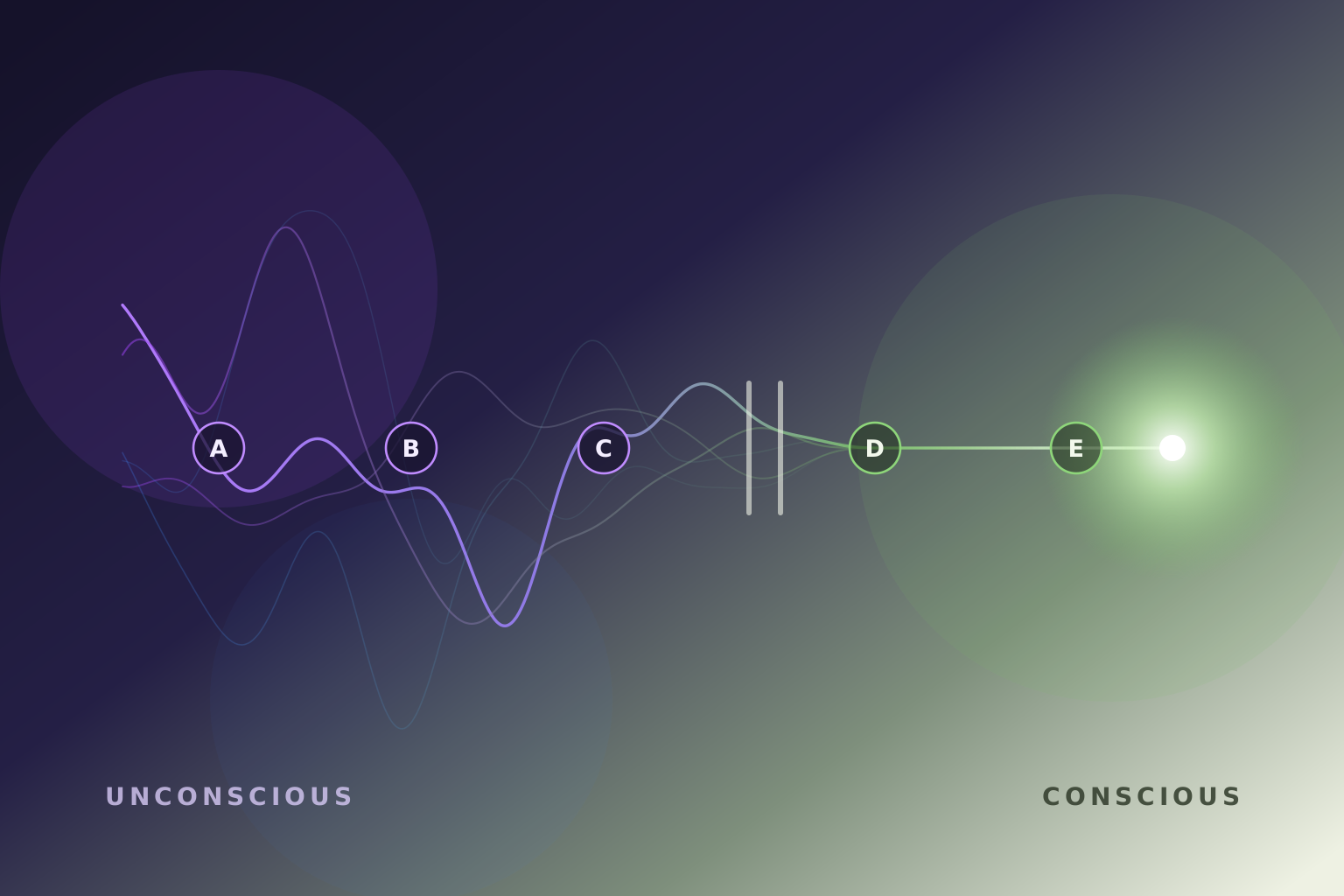
We see, we listen, and we react, and most of it happens before we ever notice. Albert Ellis called the gap between the event and the emotion the ABC model, and it is where the journey from reacting to responding begins.
A lot of things are happening around us. We see, we listen and we talk. And most of the time we are just functioning on automation, in our unconsciousness. We see things and we get to believe quite quickly; we listen, and our brain saves it into our belief without letting us know. Getting to know means consciousness. We don't even get to know what we are believing in.
The ABC Model
Psychologist Albert Ellis had a name for this gap between the things happening and our reaction. He called it the ABC model.
- A is the activating event, the thing that actually happens.
- B is the belief, the unconscious, split-second story we tell ourselves about the event.
- C is the consequence, the emotion we feel.
Take a look at these scenarios
1. Someone cuts you off in traffic. Before you've even finished processing what happened, your jaw is tight, your hand is on the horn, and you're furious.
2. You come back to your room and find your sibling has been sitting at your study table. Papers shuffled, drawers left half open, books are not in order. Before you say a word, your face goes hot and you feel a surge of anger and violation.
3. You're at a gathering. A relative or a friend makes an offhand comment that religious people “just believe things without evidence” and that faith is “intellectually lazy.” Before you've thought it through, your chest tightens and you feel a surge of defensiveness and hurt (especially if you practise your religion).
Someone cutting you off is A, seeing your study table disturbed is A, and that person's saying is A. Instead of thinking consciously, your mind worked unconsciously and told your brain a story from your previously held beliefs. In consequence of that story, your body reacted the way it reacted. You honked and got furious; you got angry and felt violation in your privacy; and you felt hurt and went into defensive mode after that person's statement.
So, it isn't A that produces C. It's B. Same event, different belief, completely different emotion. And because B fires before we're even aware of it, we usually mistake C for something the event did to us, when really it's something our own mind added.
Where the Journey Turns
This is where the journey turns: from reacting unconsciously to responding consciously, we just have to ask one more question. And here comes D and E.
- D is dispute, questioning the belief instead of accepting it as truth.
- E is the new effect, usually a calmer emotion that follows once the belief shifts.
After being cut off from the car, you could ask yourself: is he really reckless, or could he be rushing somewhere urgent, maybe even a hospital? The moment that question replaces the accusation, the fury has nowhere to stand, and what's left is closer to sympathy than rage.
Seeing your study table disturbed, you could ask: did my sibling really mean to invade my privacy, or were they searching for something urgent, maybe a note or a bill, because they couldn't reach me while I was in class? Once that question takes hold, the anger softens into curiosity, wanting to know what they were actually looking for.
And after that comment about faith being intellectually lazy, you could ask yourself: does this person truly mean to insult what I believe, or has he simply never been exposed to it beyond what he has heard elsewhere? The moment that question opens up, hurt gives way to something closer to empathy, an openness to explain rather than defend.
The Real Shift
The real shift isn't in the event, it's in the noticing. Every day we walk through dozens of these moments — cut off, disturbed, offended — and our body reacts before our mind even catches up. That's the unconsciousness we live in most of the time. But the same mind that built the belief without asking us can also be taught to pause and ask.
That pause is where consciousness begins.
It doesn't erase what happened, and it doesn't mean every reaction is wrong. It just means we finally get a say in the story we're telling ourselves.